
Hood County Arrest Warrants Explained
Chapter 15 defines the arrest warrant. Under the Texas Code of Criminal Procedure, it is a written order in which a magistrate directs a peace officer to take an accused person into custody. The judge must first have a complaint or other lawful basis that supports probable cause. The order names the person or gives a reasonably definite description, states the offense, and bears the magistrate's signature. In Hood County, a felony matter may involve the 355th Judicial District Court. Misdemeanor and fine-only cases can begin in lower courts. A warrant is not the case record. It is not a final ruling either. The issuing Hood County court can explain what has happened since the order was signed.
Chapter 15 Sets Hood County Warrant Fields
Chapter 15 is the state framework for Hood County arrest warrants. Articles 15.01 through 15.03 set the rules. They cover the written magistrate order, the identifying details it must carry, and when a magistrate may issue it. Local case handling still varies by court and offense. No county list can replace the signed court document. Read the official Texas Code of Criminal Procedure Chapter 15 for the statutory language.
The statute supplies the form and the authority; the issuing Hood County court confirms whether a local warrant still stands.
Inside a Hood County Arrest Warrant
Hood County publishes no sample warrant for public view. The local warrant-number format is unknown. Ask the court about the name, the cause number, and the issuing authority, elements drawn from Texas law and the local record inventory, because they identify the right file. Protected or sealed details may be withheld.
| Warrant or cause number | Format not verified Ask the clerk which number identifies the process. |
|---|---|
| Person or description | Identifies the person to be arrested; public records may redact details. |
| Offense | The offense named in the warrant and supporting complaint. |
| Issuing magistrate | Name or court of the judge or magistrate who issued it. |
| Bond | Amount and form, if set; confirm with court or jail. |
| Issue and service | Issue date, status, and agency assigned to serve it. |
Hood County Arrest Warrants Serve Across Agencies
The sheriff is Hood County's central contact for arrests, the jail, and bond. Constables serve precinct court process. Granbury's city marshal serves municipal warrants and acts as bailiff for the municipal court. Other authorized peace officers may execute a warrant as well. A city or JP process may not sit with the district clerk. Match the court first. For a felony or district case, contact the 355th Judicial District Court or District Clerk and the sheriff. For a city or JP matter, call that court. The officer who serves the warrant does not decide whether the court recalls it. The Hood County Sheriff's Office publishes its jail, bond, and public-record channels.
Serving Arrest Warrants in Hood County
An authorized peace officer can execute a Texas arrest warrant anywhere in the state. Custody pulls the person into the criminal process. At the Hood County Jail, booking and magistration follow. The county streams some arraignment proceedings publicly, but the sheriff warns that start times vary. Hood County's indigent-defense plan sets the timing rule. A person must be taken before a magistrate without unnecessary delay and within 48 hours. That plan describes only the local prompt-magistration framework. It promises no release and no particular bond, so ask the jail and the court what applies to the specific case.
Magistration Timing in Hood County Warrant Cases
Hood County's indigent-defense plan calls for magistration without unnecessary delay and within 48 hours. The sheriff also streams magistration live. Its arraignment notice says sessions do not begin at one fixed time. The stream is not a warrant check. The sheriff's arraignment page explains the livestream and its timing.
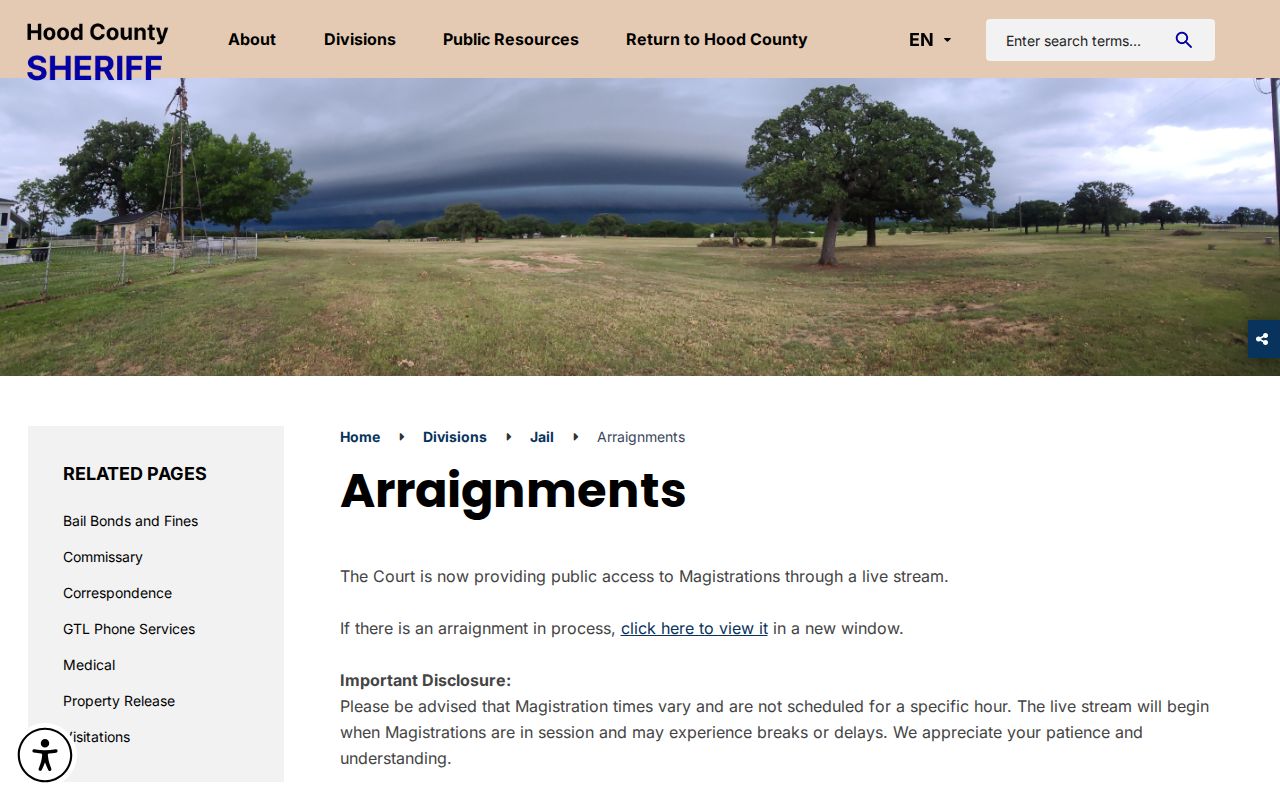
Use the stream for public proceedings after arrest, not as a live warrant-search tool.
Comparing Arrest, Summons, and Bench Warrants
An arrest warrant authorizes custody after a magistrate finds a legal basis. A summons orders appearance, not arrest. A bench warrant answers a missed court duty or another order. The notice and the issuing court show which process applies in Hood County. The bench warrant process covers the missed-date route.
| Feature | Arrest Warrant | Summons | Bench Warrant |
|---|---|---|---|
| What it orders | Officer to arrest the named person | Person to appear on a stated date | Arrest or production after a missed duty |
| Basis | Complaint and probable cause | Court process directing an appearance | Failure to appear or comply |
| Who issues it | Authorized magistrate | Court or authorized officer | Judge in the existing case |
| How to respond | Confirm, get counsel, arrange court process | Attend as directed | Contact the issuing court about recall or reset |
Executed Hood County Warrants and Public Access
For Hood County, Article 15.26 of the Texas Code of Criminal Procedure opens executed arrest warrants to the public. You request the warrant and its supporting affidavit from the magistrate's clerk during normal business hours. Confidentiality rules still apply. The sheriff's Public Information Act office covers only sheriff-held records. For a district, county, JP, or municipal court file, ask the clerk who holds it. Juvenile warrants stay confidential. Active-investigation information may be withheld, so ask what can be released instead of expecting every affidavit or identifier online. Review Texas Government Code Chapter 552 and Family Code §58.010.
Hood County Warrants vs Federal PACER
PACER is a federal court-record system. It is not a Hood County warrant lookup. If a case document names a U.S. District Court, search that court or use the national PACER Case Locator. Direct court records update as filed, while the nationwide index updates daily. A federal docket search still cannot confirm an unlisted, sealed, or local warrant. Access fees may apply. Review the official PACER fee policy before opening documents, and check the court named on the paperwork for case-specific status. You can also read PACER's official federal case-search options.
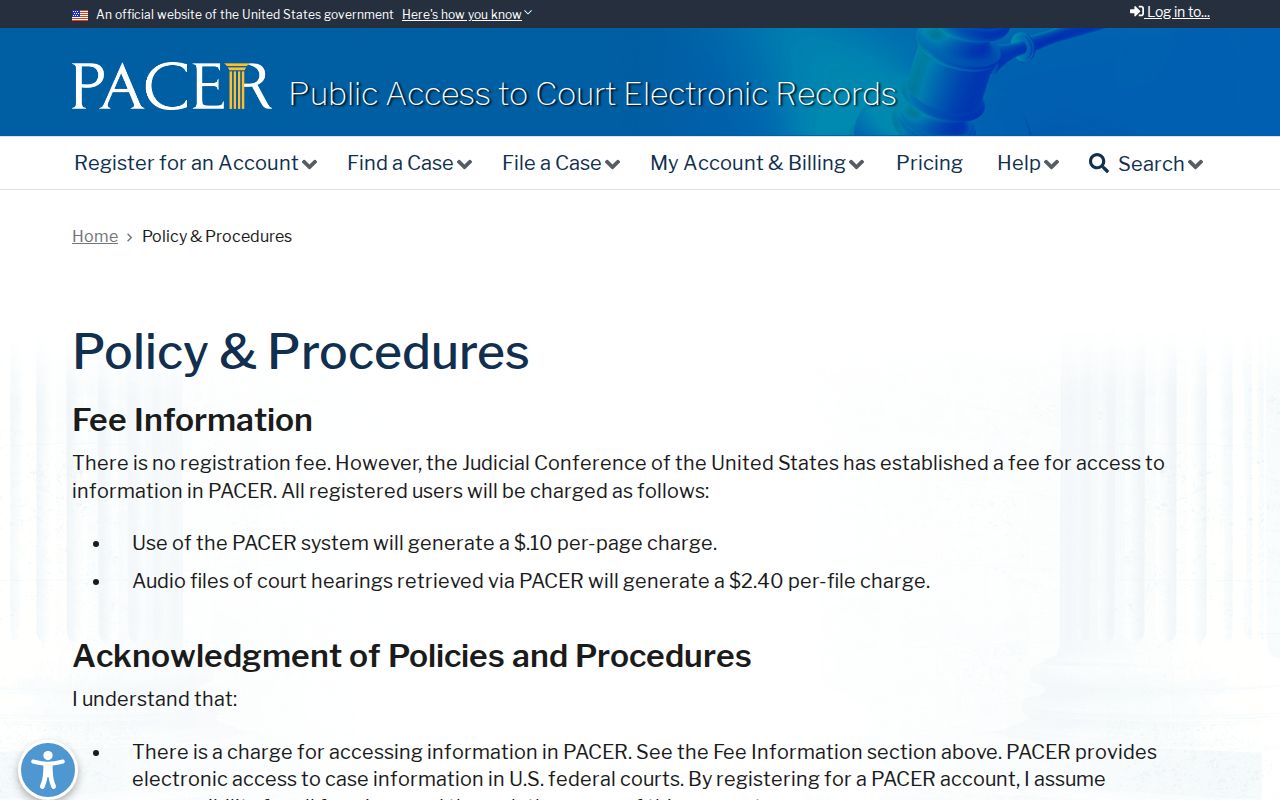
Use PACER only for federal cases. It does not search Hood County sheriff or municipal systems.
If There's an Arrest Warrant for You
Pick up the phone before you walk in anywhere. Call the issuing court and the sheriff. Ask for the case number, the charge, the warrant status, and the bond amount and type. Does the judge require a surrender or a hearing? If arrest seems likely, a lawyer can help with a voluntary surrender, a bond, or a motion to recall or quash the warrant. Remember that a bond buys release, not an ending. Hood County accepts bond posts at any hour, but only a Hood County bondsman can post one. The jail runs 24 hours at 817-579-3333. Confirm the amount and the next court appearance before you act, and keep the receipt or signed order once anything is filed.
Important: Get legal advice before arranging an appearance; the county publishes no safe-harbor promise, and bond does not close the charge.
Bond Secures Release, Not Case Closure
The sheriff in Hood County takes bond posts around the clock, and a Hood County bondsman must handle the posting. County fines work differently. Use a cashier's check or money order for the exact amount. Granbury city fines follow their own instructions. Never wire money to an unverified caller. Check the official bond and fines page before you act.
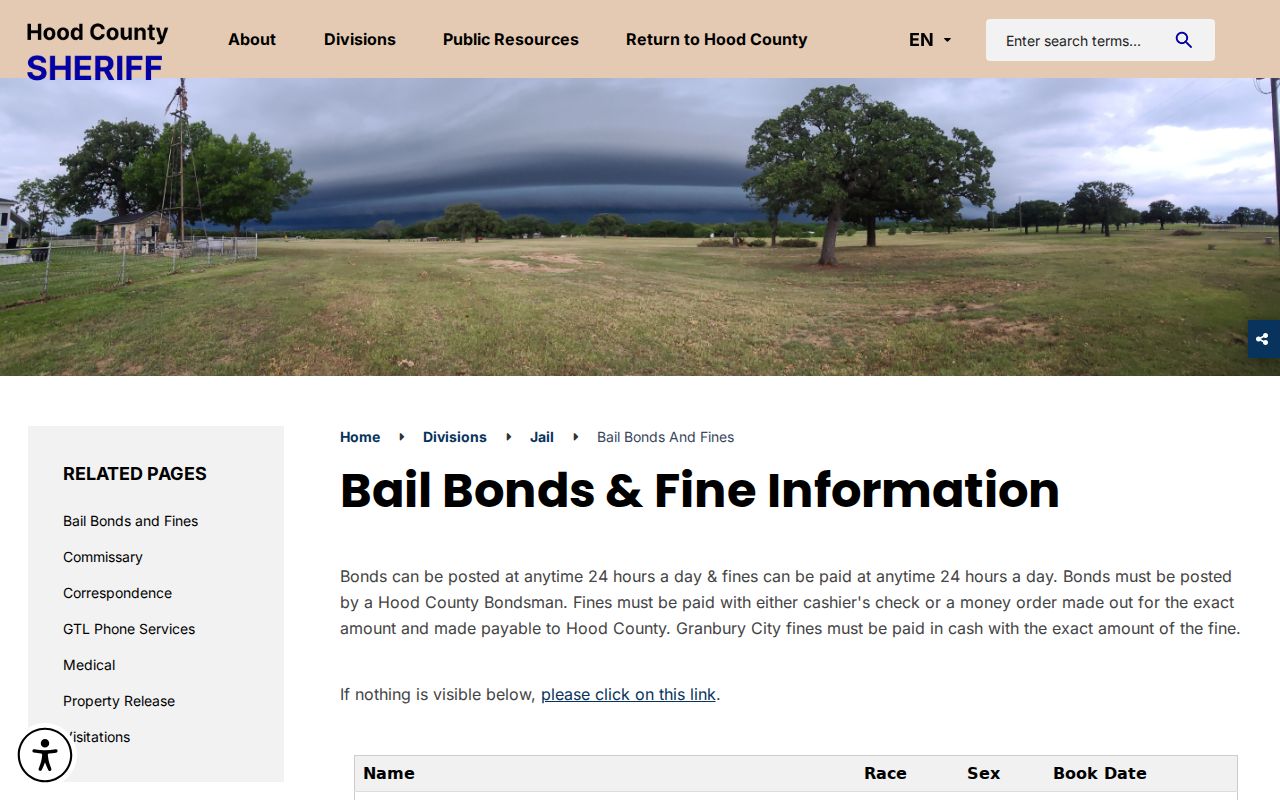
Those rules cover the Hood County channel only. The issuing judge sets case-specific terms, and the jail contact page lists the 24/7 phone and location.
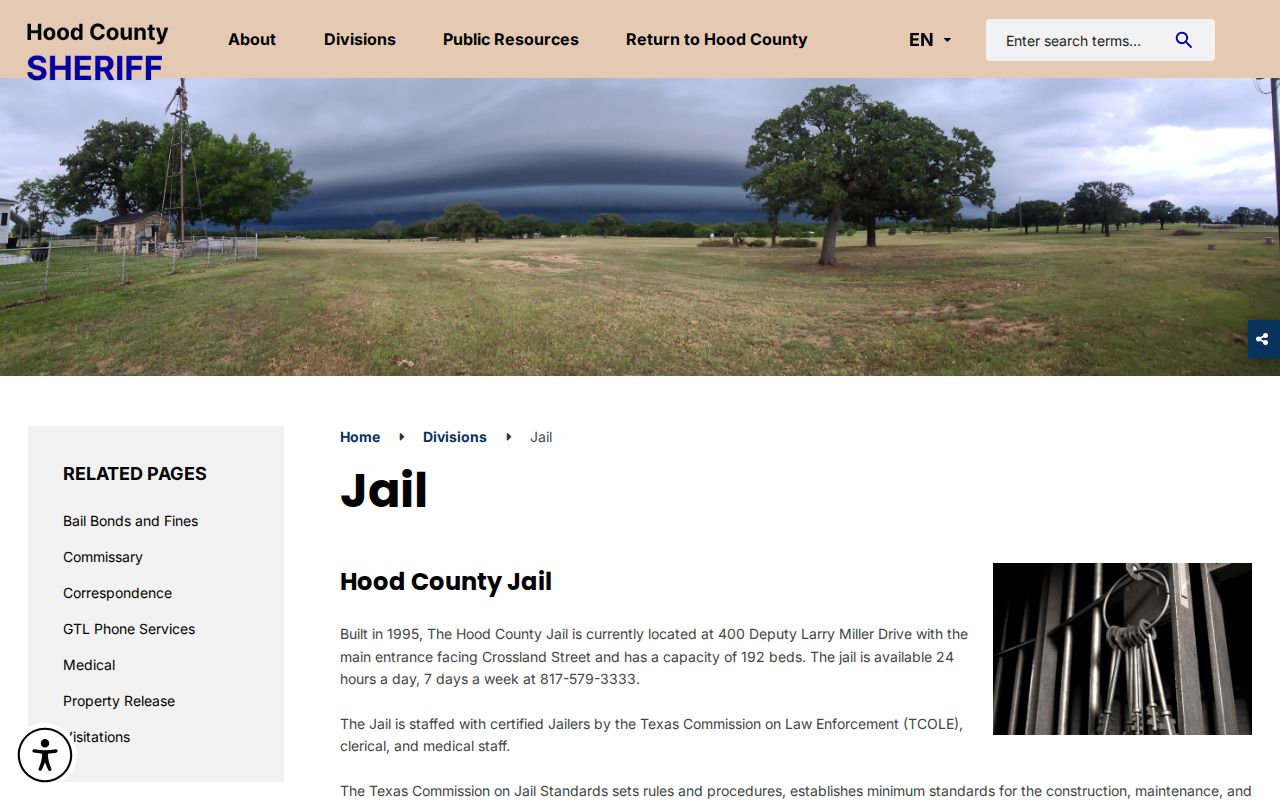
Call the jail first for custody or bond questions. In Hood County, the sheriff's View Bonds page links to an online bond display.
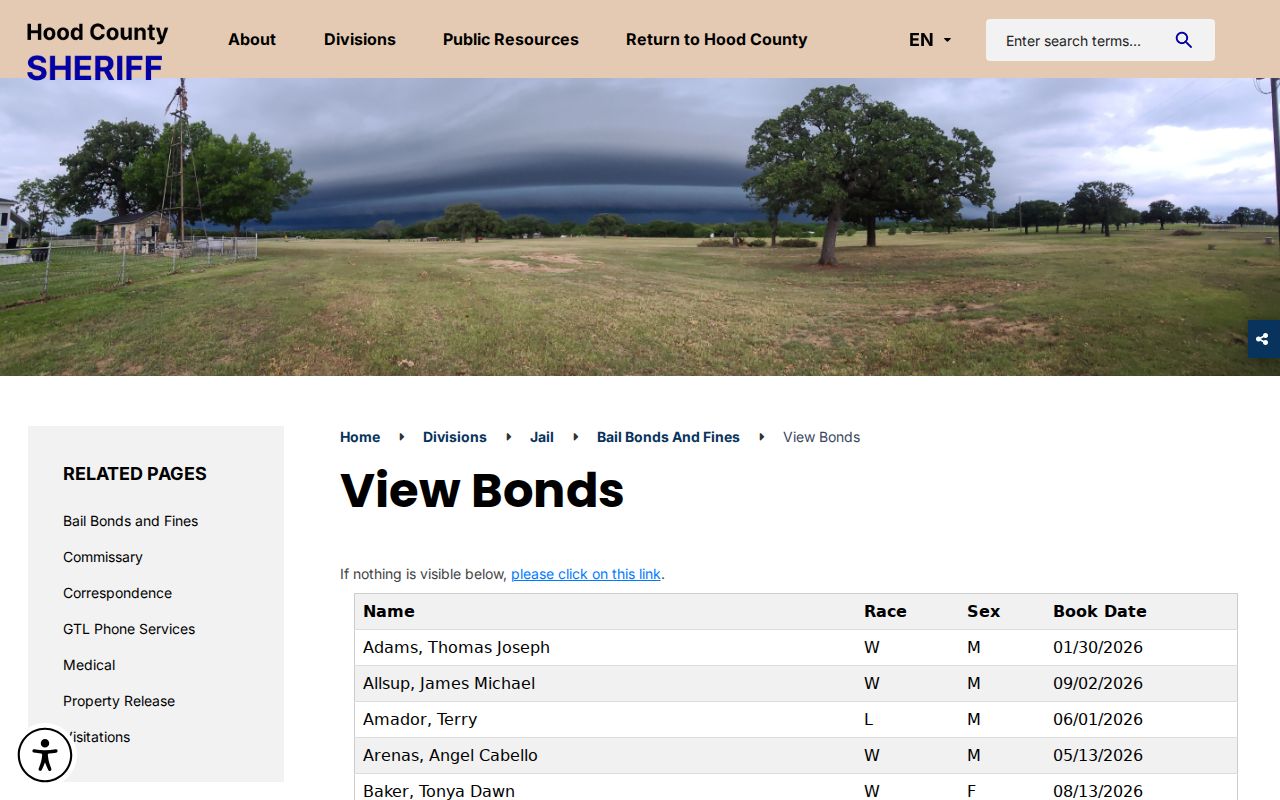
To confirm a person's own bond status in Hood County, call the issuing court or the jail directly.